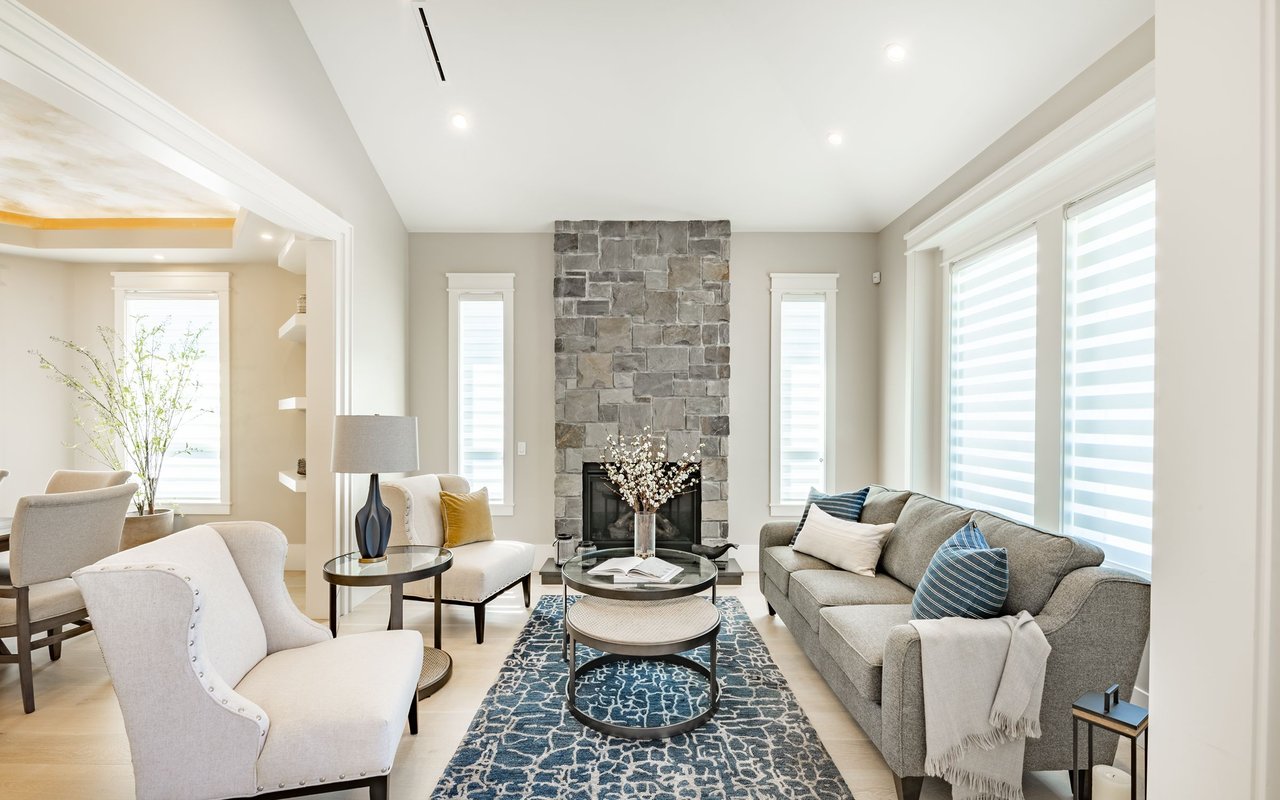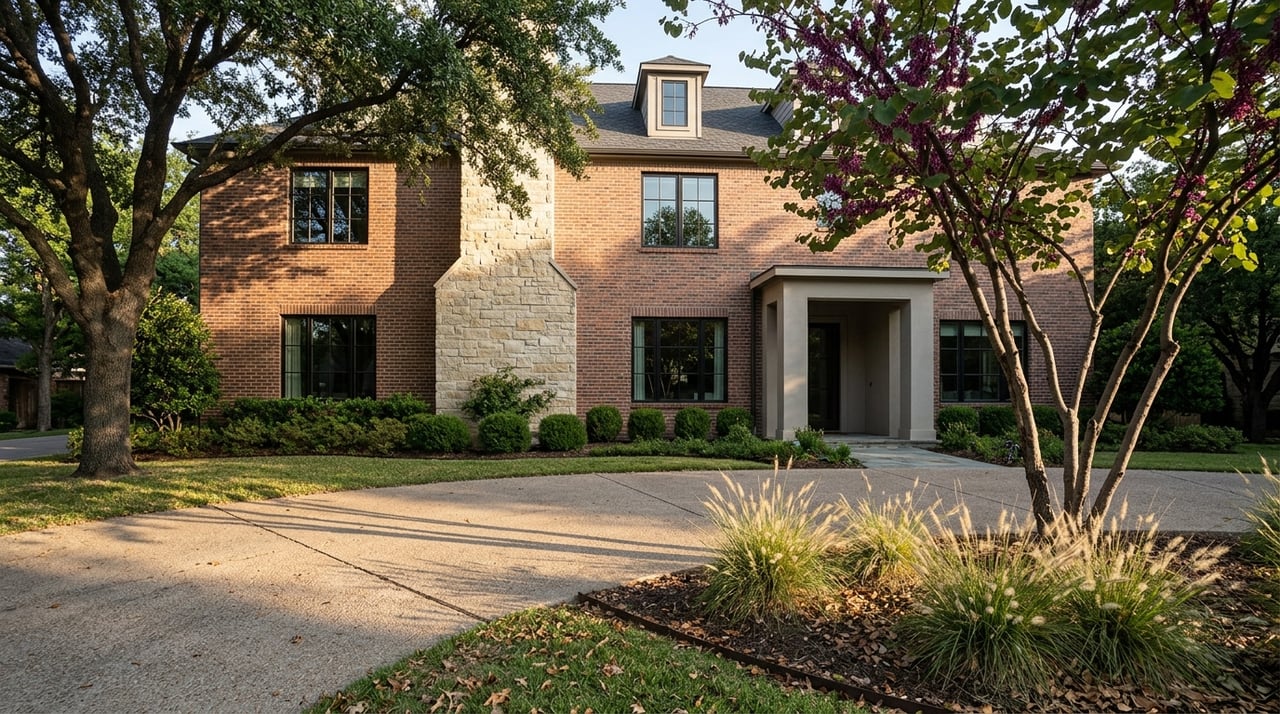
Run a search for homes in McKinney and two neighborhoods dominate the results. There's Historic Downtown, where century-old cottages sit a short walk from the Square, and there's Trinity Falls, the sprawling master-planned community where builders like Chesmar and Coventry keep opening new sections along the Trinity River. Compare the two on price per square foot and Trinity Falls looks like the obvious value almost every time. Compare them on what actually lands in a monthly payment, and the math gets more complicated than either the builder's price sheet or the historic listing lets on.
The gap comes down to a line item most buyers never see until closing: the tax certificate.
The Line Builders Don't Put on the Sign
Trinity Falls sits inside two Municipal Utility Districts, McKinney MUD 1 and McKinney MUD 2, both located outside the city limits in the extraterritorial jurisdiction. The City of McKinney's own tax information page confirms it directly: Trinity Falls is not in the City of McKinney's tax jurisdiction and falls under a legally separate taxing entity.
That sounds like good news for a buyer, since it means no city tax bill. What replaces it is not smaller. McKinney MUD 1's adopted rate is $0.992525 per $100 of assessed valuation, covering maintenance and operations along with water, sewer, and road debt service. McKinney MUD 2's adopted rate runs slightly higher at $1.05 per $100. Both districts issued bonds to build the water lines, sewer systems, and roads that made Trinity Falls buildable in the first place, and homeowners repay those bonds through the district tax on every annual bill.
Two houses in Trinity Falls can carry different total tax burdens depending on which district serves their section, even if they're a few blocks apart and priced identically on the builder's website.
What the MUD Line Actually Costs
The number that matters is the monthly one. A $5,000 annual MUD or PID assessment adds roughly $417 to a monthly payment. That's the equivalent of financing an additional $67,000 in home price, money that builds no equity and generates no return because it exists solely to retire infrastructure bonds. Run that out over thirty years and the total comes to about $150,000, paid on top of the mortgage.
The practical effect shows up when you stack two homes side by side. A $500,000 home carrying a $5,000 annual MUD assessment can carry the same real monthly payment as a $567,000 home with no district tax at all. A buyer comparing list prices alone would call the first home the better deal. A buyer comparing monthly carrying cost might call it a wash.
The rate does taper. MUD taxes typically decline as a district's bonds get retired, a process that plays out over roughly 20 to 30 years, so an early buyer in a newer section of Trinity Falls is paying closer to the full rate than someone buying into an older, more built-out phase where debt service has already started to wind down.
The Historic District Has Its Own Pricing Puzzle
Downtown's numbers carry a different kind of noise. One set of recent figures puts the median sale price in Historic McKinney at $755,996, up more than 40 percent year over year as of a May 2026 snapshot. Another dataset from the same general period puts the median closer to $599,000 to $635,000, down slightly year over year. Both can be accurate and still tell different stories, because the historic district typically has somewhere between 13 and 21 active listings at any given time. With a pool that small, one estate sale or one high-end renovation closing in a given month can swing the median by six figures. Homes here also spend roughly 38 to 54 days on market depending on the stretch, which is its own signal of a thin, uneven market rather than a stable one.
A recent sale on North Waddill Street illustrates the range on the high end: a four-bedroom home built in 1916, at 4,227 square feet, sold in March 2026 at $330 per square foot. Elsewhere on the same streets, smaller cottages built in the 1950s trade for a fraction of that per-square-foot figure.
Then there's the outlier that shows just how wide "Historic Downtown McKinney" can stretch. The Kirkpatrick estate at 903 Parker Street, a Queen Anne home and barn built between 1901 and 1902 and listed on the National Register of Historic Places, went on the market for the first time this year. The house and 1.3 acres are listed separately from the surrounding 18.5 acres, which are offered at $6 million, on a property where livestock still roam within McKinney's city limits. Historic Downtown isn't just walkable bungalows near the Square. It's also multi-acre parcels that read more like ranch listings than urban infill.
Trinity Falls Isn't One Price Point Either
The MUD comparison only tells half the story if you treat Trinity Falls as a single product. Chesmar Homes lists its Trinity Falls floor plans starting at $589,990 for homes between 2,637 and 3,830 square feet. Cadence Homes offers a townhome collection in the same community priced from $354,000 to $439,000 across 1,760 to 2,269 square feet. There's also a Del Webb active-adult section built around single-story plans and its own amenity center. Add the fact that different phases fall under different MUDs with slightly different rates, and the total cost comparison between two Trinity Falls addresses can shift almost as much as the comparison between Trinity Falls and downtown.
Trinity Falls was developed by Johnson Development, which acquired the roughly 2,000-acre site in 2016 and built it out around B.B. Owen Park's riverfront trails, a clubhouse called The Club, and a second amenity complex known as The Lodge. None of that amenity spending shows up as a MUD line, since it's typically funded through an HOA rather than the district tax, but it's part of why the total monthly number rarely matches the number on the yard sign.
Before You Compare Two McKinney Addresses
A short checklist before writing an offer in either direction:
- Ask which taxing entities attach to the specific parcel, not just the neighborhood. Collin CAD's public records show every entity levying tax against a given address, including MUD or PID assessments, and it's worth pulling before you make an offer rather than reading it for the first time on a tax certificate at closing.
- Ask for the full projected monthly payment, including MUD or PID assessment and HOA dues, not just principal, interest, taxes, and insurance based on the county's base rate.
- For historic district homes, ask how long comparable properties have actually sat on market recently rather than relying on a single median figure, since a handful of sales can distort it in either direction.
- For Trinity Falls or any MUD community, ask how many years remain on the district's bond schedule, since a newer phase and an older phase can carry meaningfully different rates even under the same community name.
A Few Common Questions
Does the MUD tax in Trinity Falls ever go away? The rate declines as the district retires its bonds, typically over 20 to 30 years, but it doesn't disappear the day you close. Buyers planning to stay long term will see the burden ease gradually rather than all at once.
Is Historic Downtown McKinney actually more expensive than Trinity Falls? It depends entirely on which two or three homes happen to have sold recently, given how few transactions the historic district sees in a typical month. The more reliable comparison is total monthly carrying cost on a specific address, not the neighborhood median on either side.
How do I find out if an address carries a MUD or PID before I make an offer? Collin County's appraisal district lists every taxing entity tied to a parcel, MUD and PID included. Pulling that record before you write an offer, rather than after, is the difference between a number you planned for and one you discover at the closing table.
Whether the right McKinney address sits inside a MUD boundary or a block from the Square, the number that matters is the one that shows up on the mortgage statement every month, not the one on the sign in the yard. GO Real Estate works both sides of this comparison regularly, running the full tax and assessment picture on specific McKinney properties before a client ever submits an offer. If you're weighing Trinity Falls against Historic Downtown, or any two McKinney addresses that look similar on paper, Let's Talk Strategy.