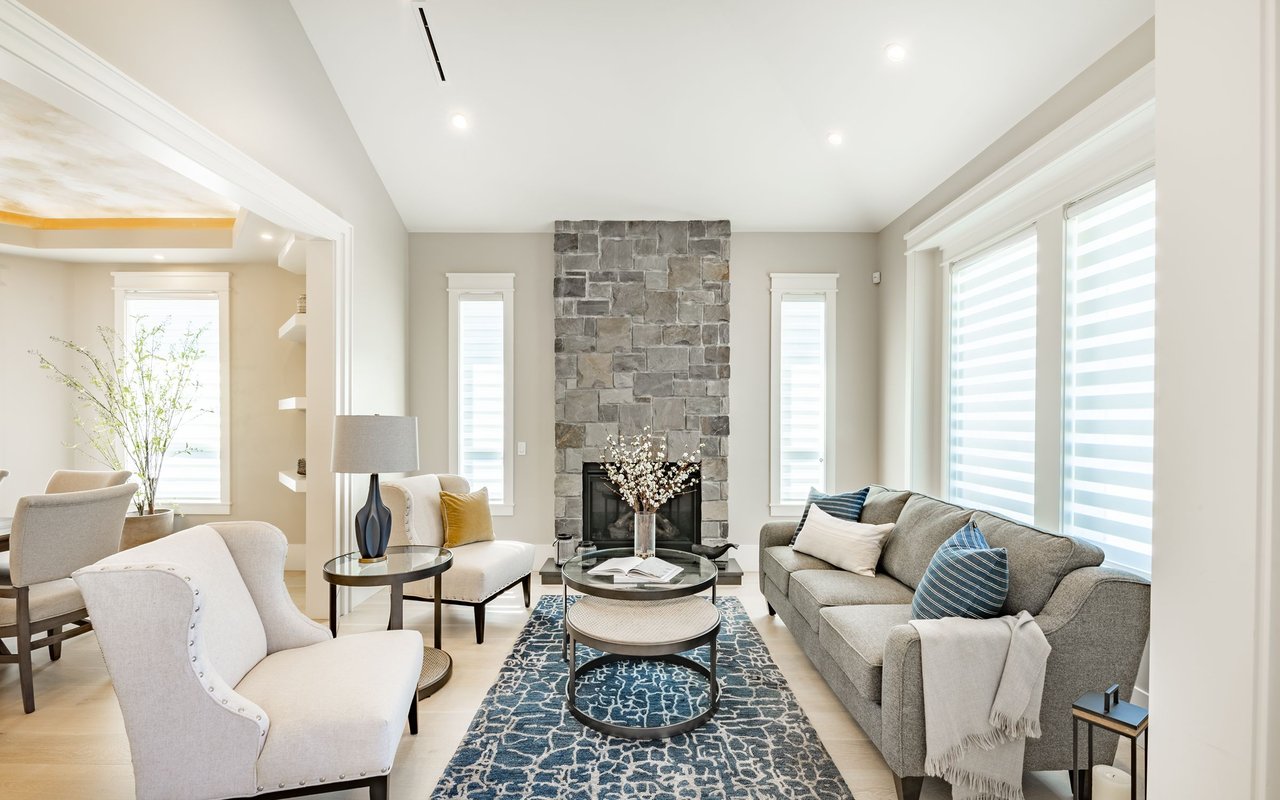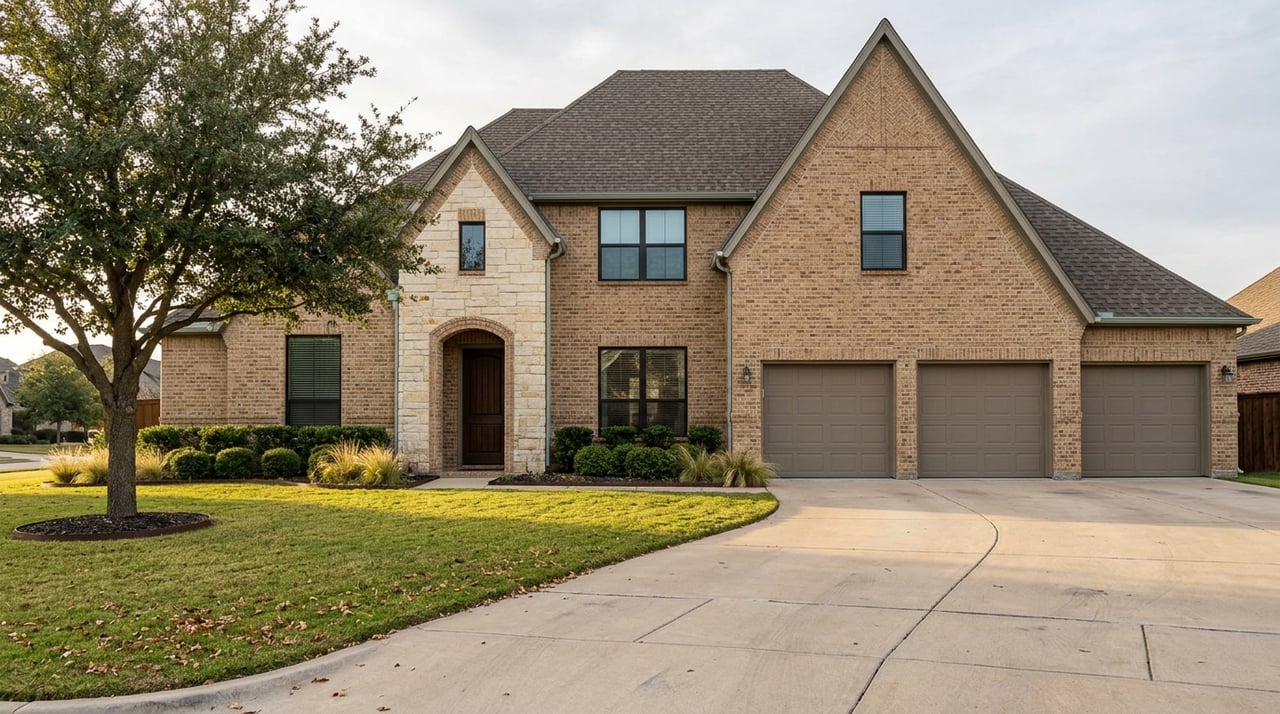
Two homes list at $425,000 in Carrollton this fall. One sits in 75007, near LBJ Freeway. The other sits in 75010, closer to Trinity Mills Station. Same price, same square footage, same school-age kids down the hall. The buyer on the 75010 house gets to closing and finds a property tax line more than $2,000 higher a year than the one on the 75007 house. Nothing was hidden. Nothing was miscalculated. The two houses were simply never going to cost the same to own, and the city's tax rate had almost nothing to do with why.
That gap is the story Carrollton's homeowners are living through right now, and it cuts against the headline most of them just read.
The 13-Year Streak Everyone Is Quoting
According to Hoodline, the Carrollton City Council adopted its Fiscal Year 2027 budget on September 2, 2026, and cut the property tax rate for the 13th consecutive year, down to $0.537000 per $100 of assessed value. City officials framed it as proof the tax burden keeps easing. The average homestead's taxable value actually dipped too, from $352,744 in FY26 to $339,580 in FY27, and average market value slid from $430,061 to $419,401. Put those two numbers together and the city portion of the average tax bill fell from $1,896 to $1,824, a $72 saving.
That is a real number and a real trend. Thirteen straight years of rate cuts is not a marketing line, it is a matter of public record. But a falling rate and a falling bill are not the same claim, and the second one is where this gets interesting for anyone comparing homes in Carrollton right now.
Other Costs Beyond the Property Tax Rate
The same September 2 budget that cut the rate also introduced a new tiered stormwater fee, effective October 1, 2026, with roughly 80 percent of residential properties landing in the middle tier. That same date brings a sanitation rate increase too, from $26.30 to $27.36 a month, on top of the $2.30 jump Carrollton residents already absorbed the year before when trash and recycling went from $24 to $26.30.
None of these fees touch the tax rate. They show up on a different bill entirely, which is exactly the point. Texas cities can fund roads, drainage, and capital projects through dedicated fees as well as property taxes. Under state law, a city that wants to raise more than 3.5 percent in additional operating revenue in a given year has to put it to voters. Carrollton is not doing anything unusual here. Addison, Coppell, Farmers Branch, Lewisville, and Plano all already run their own dedicated stormwater fees. But it does mean that "the tax rate went down again" and "my total cost of living here went down" can be two different sentences, and a buyer comparing this year's asking price against last year's affordability math should treat them as such.
The Zip Code Is Doing More Work Than the Headline Rate
Here is the part that actually explains the $2,000 gap between those two hypothetical Carrollton houses. Carrollton spans three counties, Dallas, Denton, and Collin, across 36.6 square miles and roughly 134,000 residents. A single citywide rate cut applies evenly across all of it, but the total tax bill a homeowner pays layers city, county, and school district rates on top of each other, and those layers are not uniform.
Property data from Ownwell shows the spread in plain dollars: the average annual tax bill in the 75007 zip code runs about $6,721, while the average bill in 75010 runs closer to $9,032, a difference of roughly $2,300 a year on comparably priced homes. Carrollton's overall median effective tax rate sits at 1.71 percent, above both the Texas state median of 1.48 percent and the national median of 1.02 percent. The reason for the zip-code spread, according to that same data, comes down to differences in school district levies and local assessment districts layered on top of the base city and county rate.
| 75007 | 75010 | |
|---|---|---|
| Average annual tax bill | ~$6,721 | ~$9,032 |
| Primary driver of the gap | Lower school district levy, fewer overlapping assessment districts | Higher school district levy, proximity to special assessment zones near Trinity Mills |
| What the city's rate cut changes here | Same modest citywide savings | Same modest citywide savings, but a smaller share of the total bill |
The city's 13-year cutting streak is real in both columns. It is just a smaller share of a bigger number in one of them.
Understanding the Trinity Mills TIRZ
That "local assessment district" language in the 75010 column has a name, and it is worth understanding when comparing homes near Trinity Mills Station. In January 2006, Carrollton created a Tax Increment Reinvestment Zone covering parts of Downtown Carrollton and the Trinity Mills DART station area, a financing tool the city has used to fund infrastructure for the light rail redevelopment happening there. The City of Carrollton and Dallas County agreed to dedicate 65 percent of future tax revenue growth inside the zone back into infrastructure improvements within it. Carrollton-Farmers Branch ISD and the Dallas County Community College District both declined to participate, which means the school district gets none of that captured growth even though its own levy still applies to every home in the zone.
Here is the mechanic that matters for a buyer: according to the Texas Comptroller, being inside a TIRZ does not change your posted tax rate. What it does is fund public investment, like the $1 billion EVIVA Trinity Mills development that finished construction on 26 acres of city and DART-owned land in 2025, complete with a public esplanade, office space, retail, residential units, and a planned hotel with direct rail access. Public investment like that tends to push nearby property values up. Rising appraised value, not a rising rate, is what raises the bill. A University of North Texas study released in November 2025 found that transit-oriented development within a quarter mile of DART stations has generated $18.1 billion in direct economic impact across North Texas over 25 years, including $21.1 million in property tax revenue from construction around DART stations in 2022 through 2024 alone. That is the growth engine behind neighborhoods like the one immediately around Trinity Mills Station. It is also, mechanically, part of why 75010 carries a heavier average bill than 75007.
None of this means a TIRZ home is a bad purchase. It means the appreciation story and the tax bill story are the same story, and a buyer who only compares list prices is missing half the picture.
What This Means If You're Comparing Homes Here
Two homes at the same list price in Carrollton can carry meaningfully different carrying costs, and the difference rarely shows up until you pull the actual tax statement. Before comparing two Carrollton addresses, it is worth checking each property's individual line items with the Dallas, Denton, or Collin County appraisal district, since the county depends on where the home physically sits. Ask whether the address falls inside the Trinity Mills TIRZ boundary, since that status is public record and any agent working new construction or resale near the station should be able to confirm it. And treat the city's rate cut as one input among several, not a stand-in for what you will actually owe each October.
A Few Questions Worth Asking
Does being in the Trinity Mills TIRZ mean I pay a higher tax rate than my neighbor outside it? No. The TIRZ does not set a separate rate. It redirects a share of the tax revenue generated by rising property values inside the zone toward infrastructure in that zone. Your rate is the same as everyone else's in that taxing jurisdiction. Your bill can still be higher if your appraised value has grown faster because of nearby investment.
Will the new stormwater fee and the sanitation increase show up on my property tax bill? No. Those are utility-style fees billed separately from the ad valorem tax statement, which is part of why they do not appear when someone quotes you the citywide tax rate.
Is 75010 always going to cost more than 75007? The current averages reflect today's school district levies and assessment districts, not a fixed law of the city. Those levies are set annually and can shift. The safest approach is pulling the current-year statement on the specific address you're considering rather than relying on a zip-code average.
Comparing homes on price alone in a city with three overlapping counties, a moving tax rate, new fees, and an active TIRZ is a good way to miss the number that actually matters. Go Real Estate works through these layers with buyers and owners across Carrollton and the rest of North Texas every week, pulling the real tax statement, checking TIRZ and assessment district status, and building a true cost picture before an offer goes in. If you're weighing a move into Carrollton, or trying to understand what a home you already own here actually costs to keep, Go Real Estate can walk through the specifics with you. Let's Talk Strategy.
This article is general information, not legal, tax or financial advice. Consult a qualified professional about your situation.